
Every link I build clears the same six checks before it goes anywhere near a client's site: Authority Score of 15 or higher, at least 1,000 monthly organic traffic, a traffic history with the right shape, topical relevance, an editorial gut-check, and a clean backlink profile.
That's it...that's the whole list. No secret sauce, no proprietary "AI" scoring model, no 47-factor matrix. Just six checks, applied to every link prospect, whether it comes from the network I've built over 14+ years or from fresh outreach.
This post walks through each one: the threshold, why it's there, and what failing it actually looks like.
I built this checklist for a simple reason: I've bought bad links. Plenty of link sellers are happy hitting their monthly quota with whatever clears their own low bar. The six points below are the bar I wished those sellers had used.
1. Authority Score of 15 or higher
I use Semrush's Authority Score, not Ahrefs DR or Moz DA. Partly because Semrush is where the rest of my reporting lives, and partly because no third-party authority metric is trustworthy on its own…so I'd rather use one and treat it as a starting point.
And you know what’s interesting? Nobody spam emails me with “hey, I can get you links on an AS 50 website”. It’s always DR and DA. So Semrush it is.
That's why the threshold is 15, not 40. AS is the easiest signal on this list to fake, and inflated authority metrics are the entire business model behind $50 "DR70" guest posts. A modest, honest AS with relevance and real traffic behind it beats an impressive number propped up by link schemes every time.
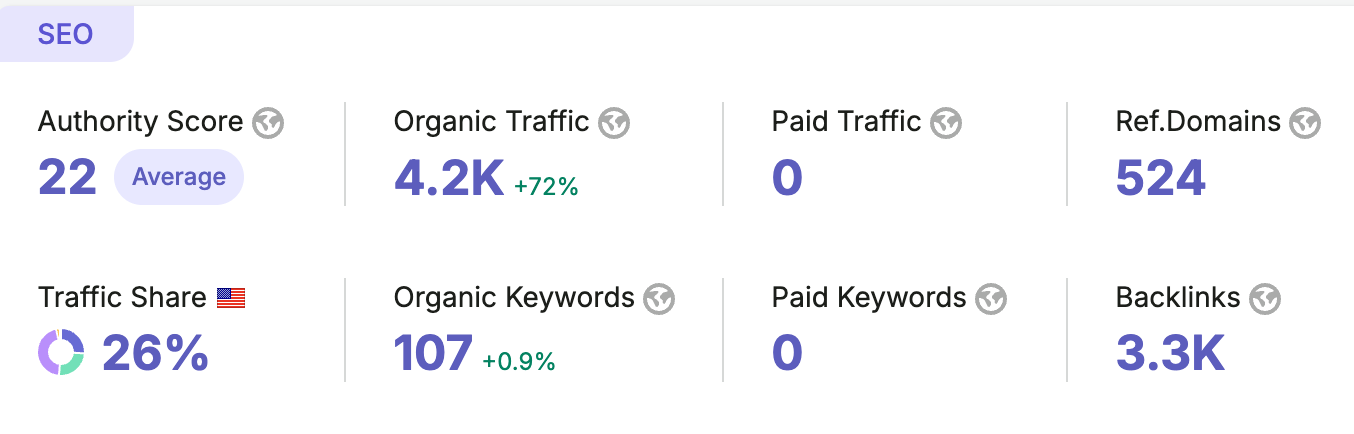
This website has good metrics on paper: good AS, a healthy-looking organic traffic, and 26% US traffic share. But it failed our checks once we looked deeper.
2. At least 1,000 monthly organic traffic
Traffic is harder to fake than authority (it’s the relevance that actually gets you), which makes it the more honest signal of the two. If Google sends a site 1,000+ real and relevant visitors a month, Google trusts it. That's the endorsement I'm actually buying on a client's behalf.
Most link sellers are fine with placements pulling 500 monthly visits or less coming from software or serial number serial numbers. I've seen plenty offered with effectively zero. Those links exist for the metrics screenshot, not for the ranking effect.
Full transparency: this threshold used to be 2,000, and I lowered it. Not because my standards dropped, but because the web changed. AI answers are pulling traffic away from informational sites across the board, so absolute numbers mean less than they did two years ago.
What this check actually verifies is if Google still sends the site real visitors at all. A site holding 1,000+ monthly organics in today's SERPs is earning the trust I'm buying. Demanding 2,000 would just filter out honest sites shrinking with their market while the fakes inflate right past it.
3. A traffic history with the right shape
I used to state this check as "no declining traffic". A strict, clear-cut rule. AI answers changed that.
Since generative results started eating informational SERPs, almost every informational site is down, including the genuinely good ones. A gradual slide that matches the site's niche is the new baseline, not a red flag.
Heck, even NYPost.com is trending down!
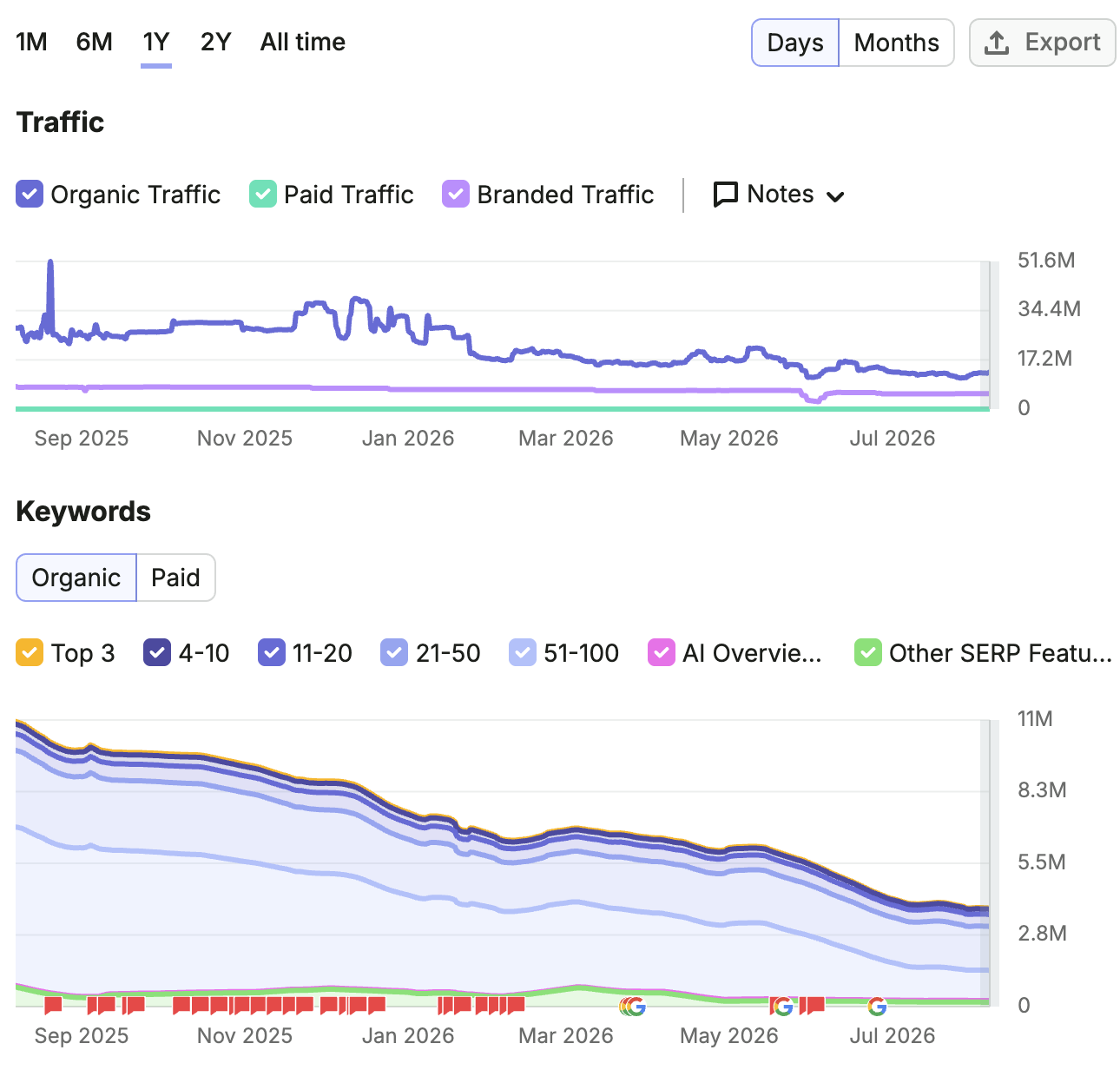
What still fails the check is the shape: a cliff, where the domain died and got revived by a new owner, or a hockey stick with no content investment behind it. Real sites drift with their market. They don't fall off a ledge or triple overnight.
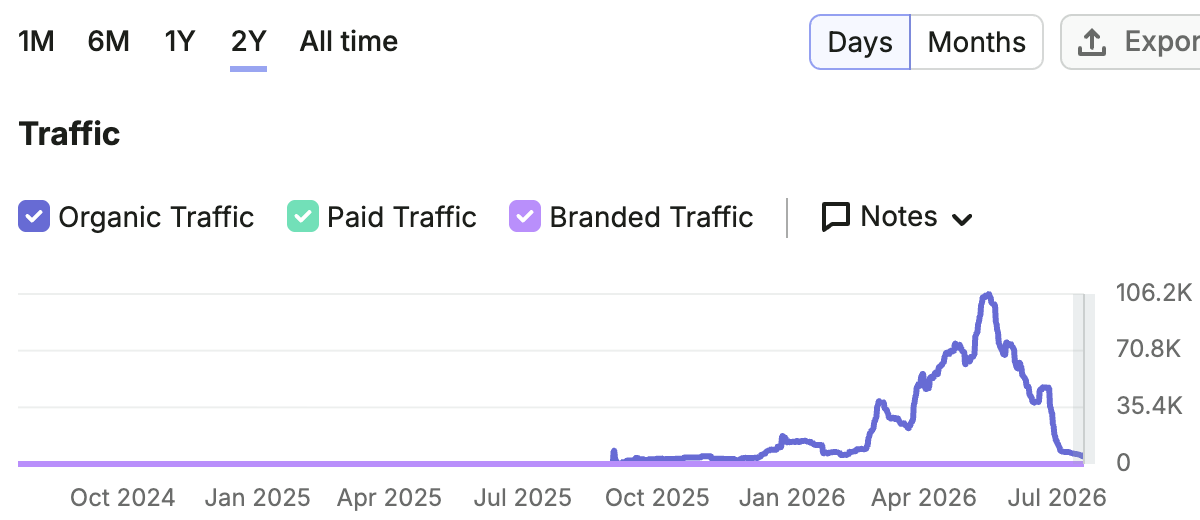
Zoom out 2–3 years when you check this. The last 6 months of a chart can hide both patterns.
I discussed traffic "tells" including a "hockey stick" pattern on this post: How To Spot PBNs.
4. Topical relevance
The premise here is simple: it’s a good thing to earn backlinks from websites in a similar (or adjacent industry) to yours.
The test I use is equally simple: can I explain, in one sentence, why this site would plausibly link back to my client?
A motorhome rental brand being cited by a road trip blog needs no explanation. A link from a foodie blog? That’s still quite possible if we I use my brain cells and write a guest post from a creative angle.
But the same brand linked from a site about crypto tax software needs a story nobody will believe…including Google.
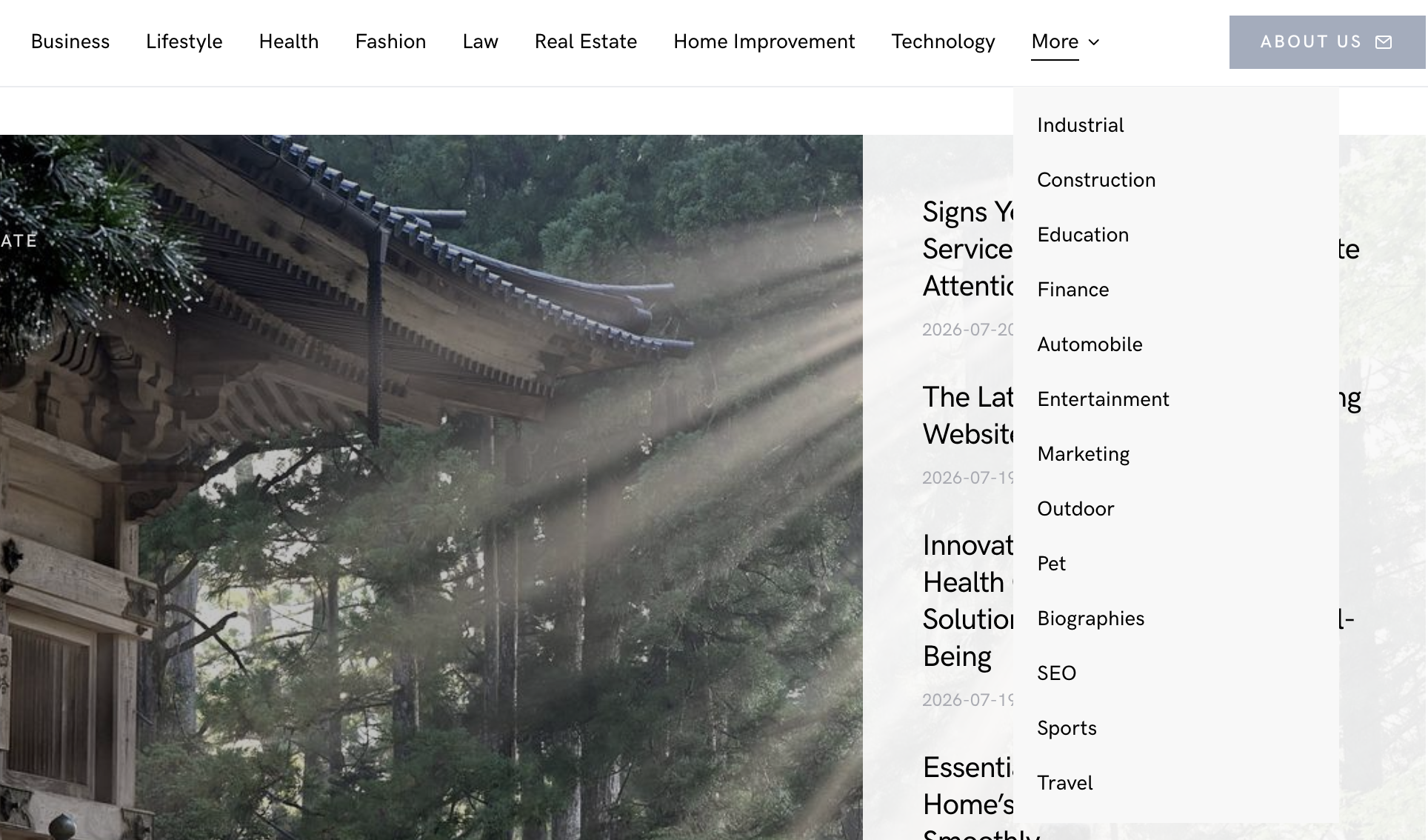
Relevance is also where topic sprawl shows up. A site with categories for parenting, CBD, casinos, and industrial equipment isn't relevant to anything, because it isn't about anything.
5. The editorial gut-check
This is the human check, the one a metrics dashboard doesn't see.
I simply open the site and - without being too philosophical - ask these questions: would a real person read this on purpose? Would a real person visit this website?
Here's what I'm looking for:
Ten minutes on the site answers most of it.
This is also where dressed-up PBNs get caught. Sites engineered to pass checks 1 and 2 but hollow underneath.
6. A clean backlink profile
Every check so far looks at what the site sends out: traffic, relevance, editorial quality. This one looks at what's pointing at the site in the first place.
Before any placement, I pull the prospect's own referring domains. I'm not re-checking authority because that belongs in check #1. I'm checking for manipulation: reciprocal schemes where site A links to site B links back to site A on repeat, a PBN fingerprint, or a bunch of random links like this one:
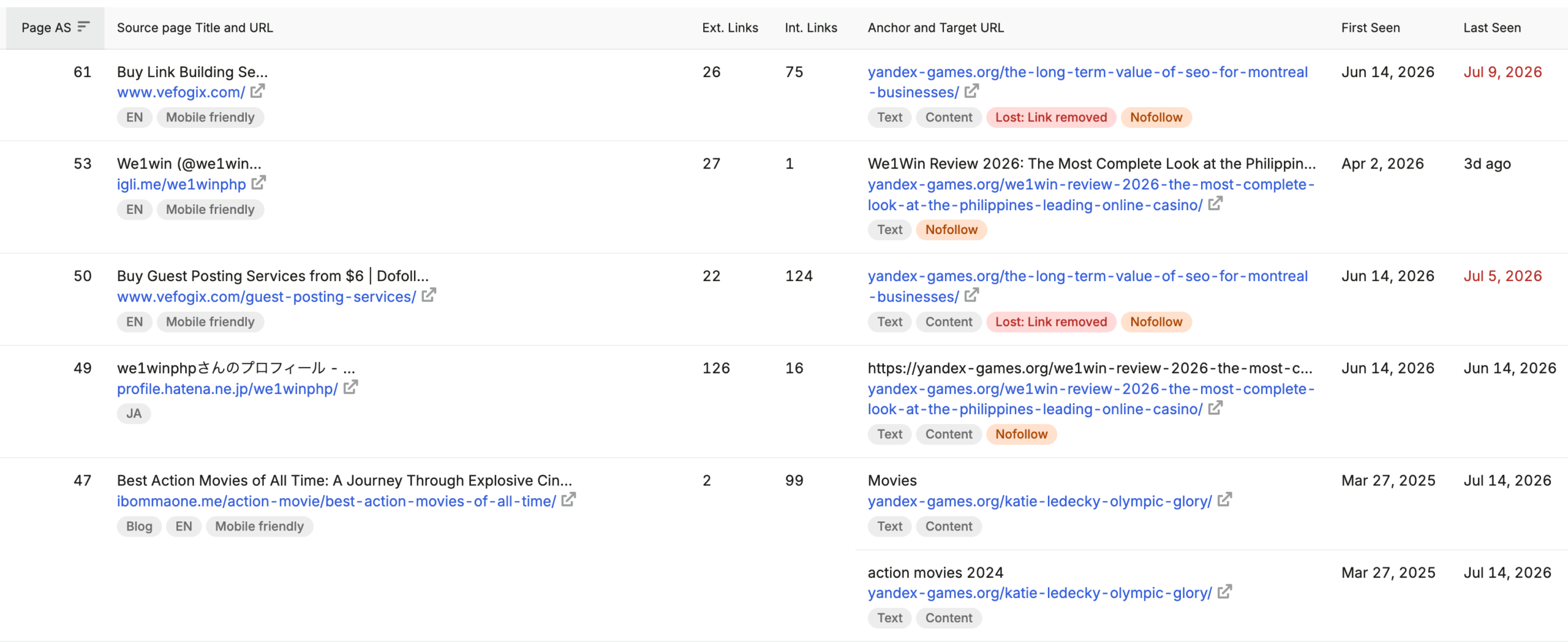
A site can look completely legitimate on the surface and still be sitting on a foundation of manipulated links. That foundation is what eventually gets a domain penalized — and if it goes down, it takes your client's link down with it. This is the same supply chain that gets a full breakdown in [how to spot a dressed-up PBN before you buy the link]; check 5 catches it by eye, this one catches it in the data.
Why six checks and not one authority score
Because every single-metric shortcut has already been gamed. Authority scores get inflated, traffic gets faked with irrelevant rankings, and "DR" appears in more scam emails than any other two letters in SEO.
The six points work as a system: the metrics (1-3) filter out the obviously weak, and the judgment checks (4-6) catch what's engineered to beat the metrics. In practice, most bad prospects fail three or four at once. Run the first three checks and you've usually saved yourself the last three.
Steal it
This checklist isn't a secret. In fact, anyone can do it! But not everyone does it because 99% of SEOs will find the easy way out - and for link building, that’s deciding solely on domain strength and organic traffic.
This six-point checklist is the standard I think buyers should hold every link seller to, including me. If you're building links yourself, run every prospect through it.
And if you'd rather have someone run it for you, someone whose answer to "who vets the sites" isn't "you do", that's exactly what my link building services are: every placement, all six checks, with receipts in a live spreadsheet.