
Some of the worst links I've ever bought looked great on paper. Authority Score in the 40s, five-figure "organic traffic," clean design, real-sounding author names. Every one of them was a PBN wearing a costume.
A dressed-up PBN is a private blog network site engineered to pass the exact checks most link buyers run. The metrics are inflated on purpose, because the seller knows you're going to look at them. This post covers the tells that survive the makeup and the checks I run after 14+ years of building links, and yes, after getting fooled myself.
What a dressed-up PBN actually is
A classic PBN is easy to spot: expired domain, recycled content, no traffic, links for sale in bulk. Google got good at catching those, and so did buyers. So the sellers upgraded.
The modern version is built to beat your checklist. The operator buys an aged domain with real history, redesigns it to look editorial, pumps the metrics with link schemes and junk traffic, and then sells placements at "guest post" prices. It's not a link farm that looks like a link farm. It's a link farm that looks like a niche magazine.
The economics explain everything else in this post. Running a site that earns real traffic is expensive. Faking the signals of one is cheap. Every tell below is a place where the operator saved money.
Why the metrics won't save you
Authority Score, DR, DA: all of them are third-party estimates, and all of them can be gamed. A seller can inflate DR into the 70s with a few hundred dollars of tiered links. That's the entire business model behind the "$50 DR70 guest post" offers flooding your inbox.
Traffic numbers get gamed too. A dressed-up PBN often ranks a handful of pages for easy, irrelevant keywords: song lyrics, name meanings, software codes, "what does the fox emoji mean", purely to make the Semrush traffic chart look alive. The metric is real, but what it represents is not.
So the metrics are where you start, not where you stop. Here's what I check next.
The seven tells
Here are seven things that could indicate a link prospect is actually a PBN in disguise.
1. Where the traffic actually comes from
Open the site's top organic pages in Semrush. On a real site, traffic clusters around its supposed topic. On a dressed-up PBN, a huge percentage of traffic often comes from two or three pages ranking for keywords that have nothing to do with the niche it's selling links in.
A "home improvement magazine" whose top page is a viral post about a Netflix show isn't a home improvement magazine. It's a traffic costume.

~38% of website traffic comes from just three pages.
2. The traffic trend, zoomed out
Don't look at the last 6 months. Look at 6 months, or even 1-2 years. Dressed-up PBNs show one of two shapes: a sudden cliff (the domain died, got bought, got revived) or a suspicious hockey stick with no matching content investment.
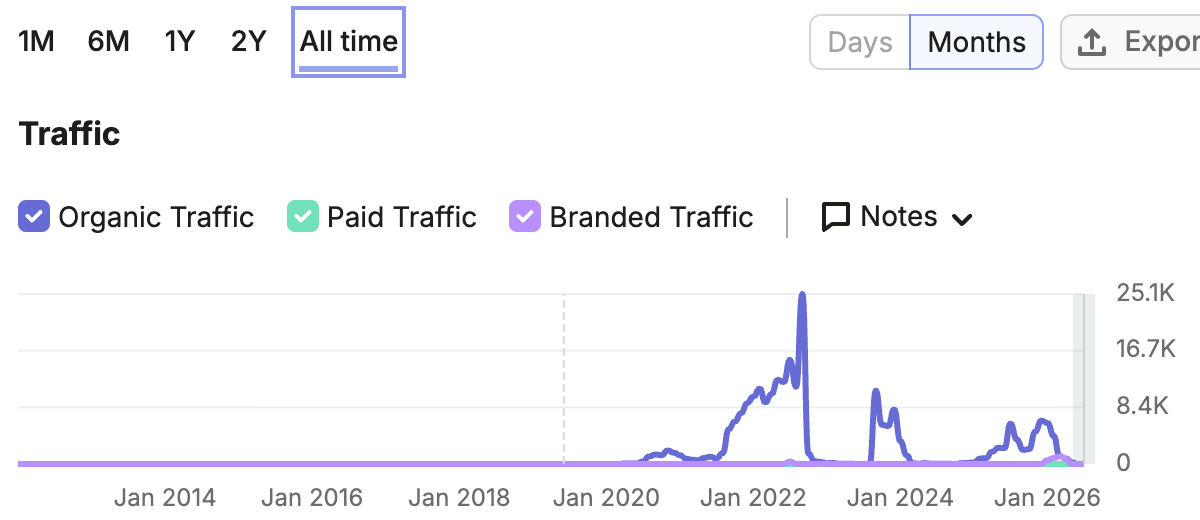
Sample of a "hockey stick". The site tanked around 2022-2023, then got revived in 2024. It tanked again in 2025, got revived in 2026 and...you guessed it...tanked again.
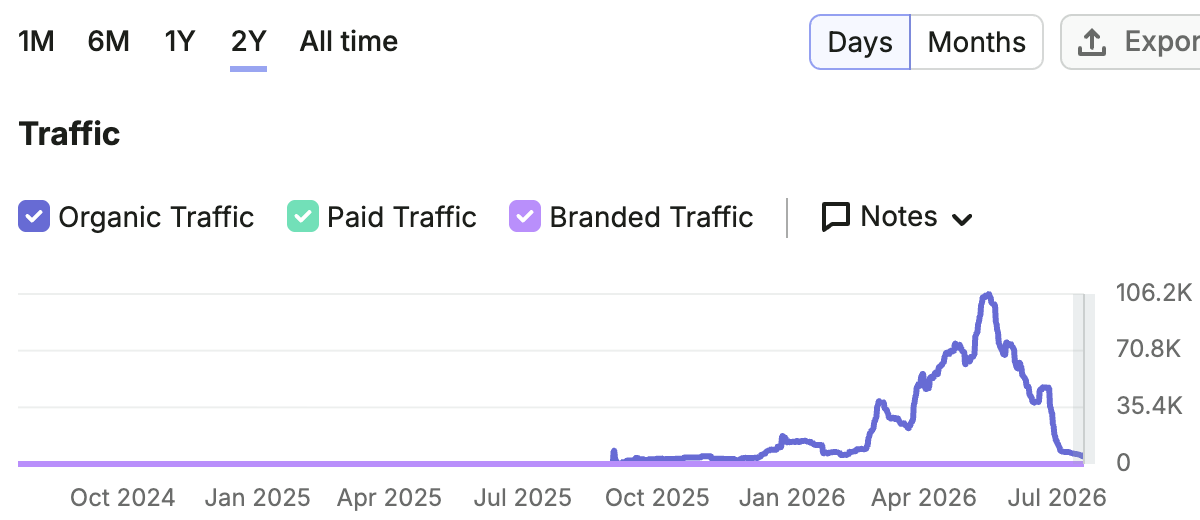
Sample of a "nose dive". The site peaked in organic traffic in May-June of 2026 and was in a free fall ever since.
But here's a caveat that didn't apply a few years ago: since AI answers started eating informational SERPs, almost every informational site is down. A gradual, industry-wide slide no longer separates real sites from PBNs. It's the new normal, and I weigh it accordingly in my vetting. What decline can't explain away is the shape: real sites drift down with the market, they don't fall off a cliff or triple overnight.
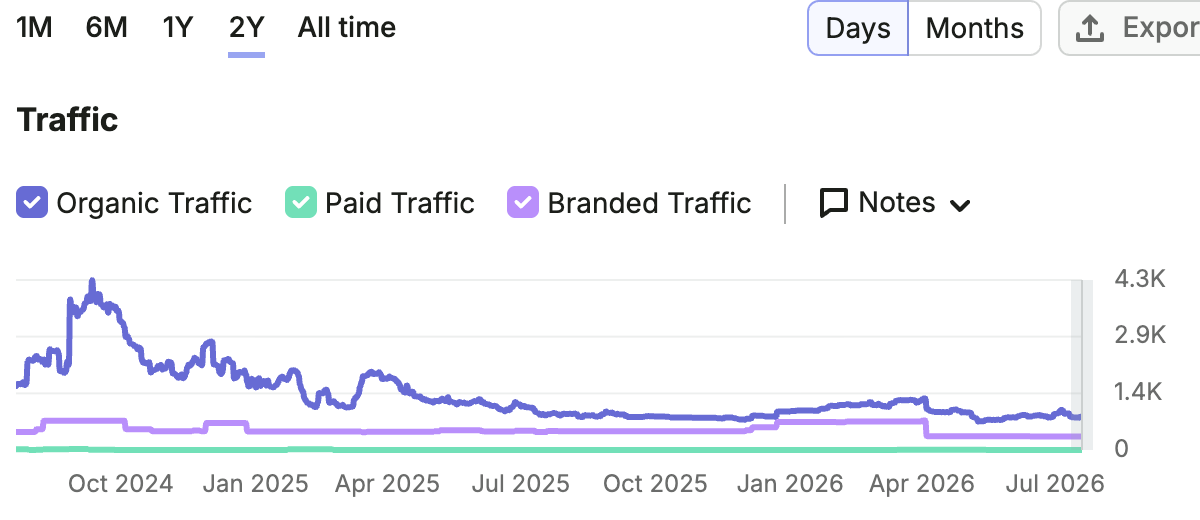
Sample of an acceptable traffic decline. The site is clearly past its glory days, which could be due to a number of reasons, but traffic has been relatively stable since 2025.
3. Topic sprawl
Real niche sites say no to content. They're picky because they really care about their websites. But PBNs can't afford to because every rejected topic is rejected revenue. So you get a "parenting blog" with categories for crypto, CBD, casino reviews, and industrial equipment.
If you can't answer "who reads this site on purpose?" in one sentence, nobody does.
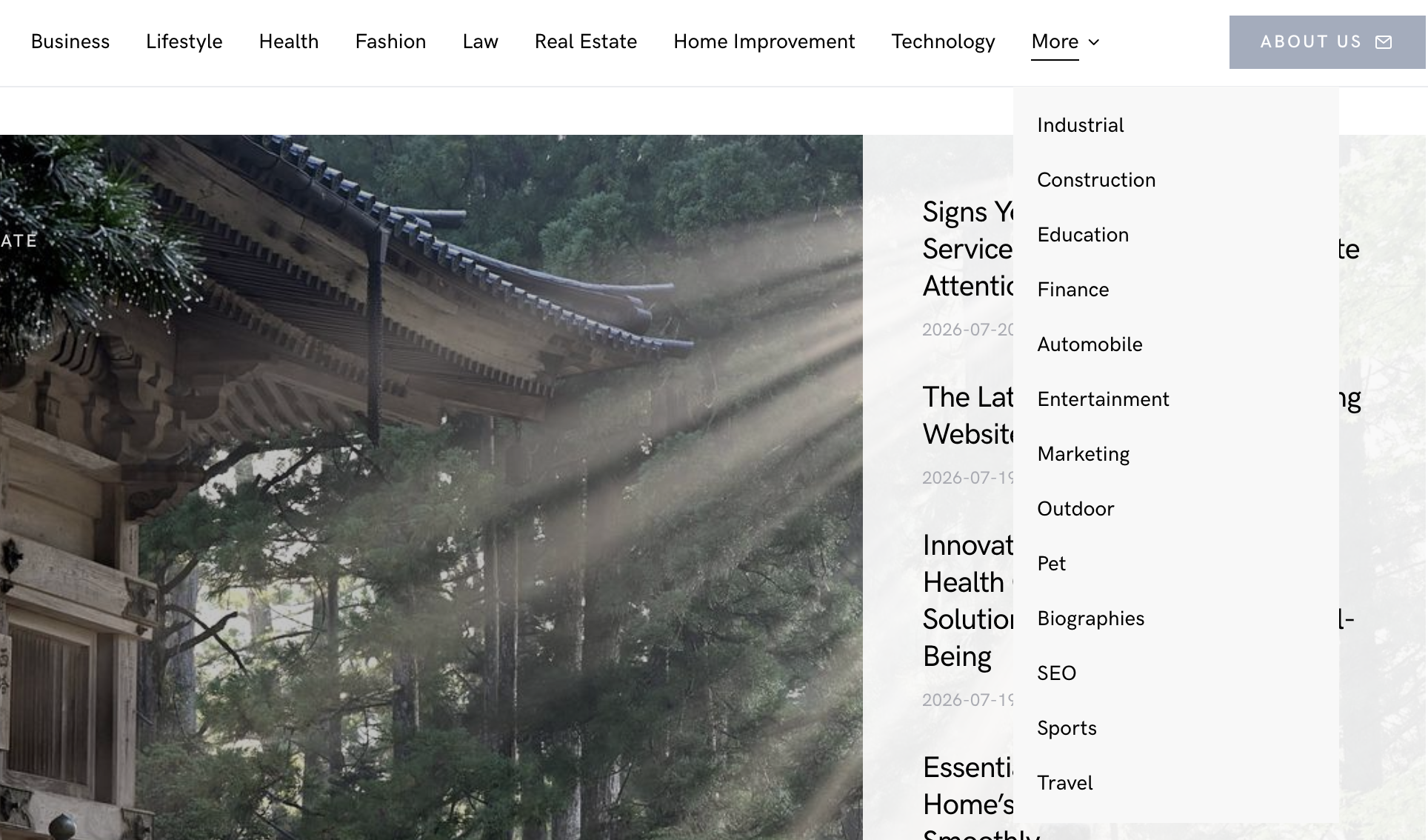
This website has categories ranging from SEO to...biographies?
4. The authors don't exist
Click three author bylines. On a real site, at least one leads somewhere: a LinkedIn, a personal site, other bylines elsewhere. On a dressed-up PBN you get stock-photo headshots, no bios, or one "editorial team" byline on 400 posts. Or maybe there is no author at all...
Reverse image search a headshot if you're unsure. I've found "senior editors" who were also dentists in Ohio and life coaches in Berlin, depending on the site.

"Kylan Sierra" writes everything from SEO to fashion.
My take on this is this: I'd rather reach out to an organization instead of a clearly AI-generated persona.
5. The outbound link pattern
This is the most reliable tell on the list. Open 10 recent posts and look at where the external links go. A real site links to sources: studies, tools, news, big publications. A PBN links to customers: a different commercial site in every post, always in-content, always with a money anchor like "best CBD gummies for sleep."
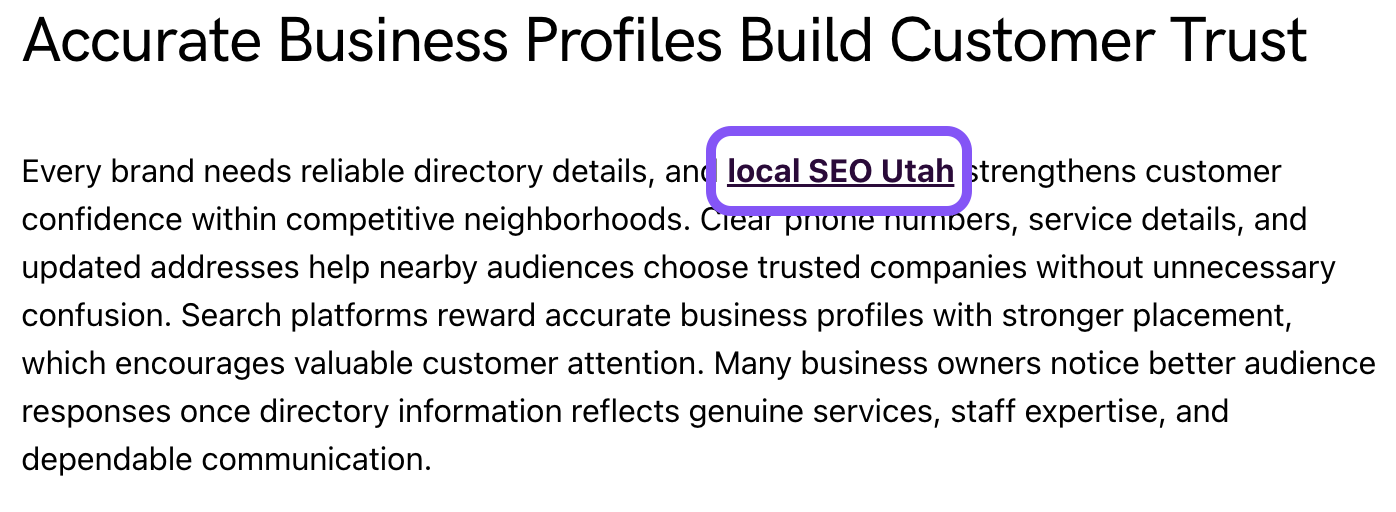
They didn't even try using an anchor text that makes grammatical sense.
6. The site's own backlink profile
Run the domain through a backlink check. Dressed-up PBNs inflate their authority with the same junk they sell so you'll see link schemes, foreign-language spam, or tight little clusters of sites all linking to each other with the same design template and the same hosting.
If the site's authority is built on garbage, that's exactly what it's passing to you.
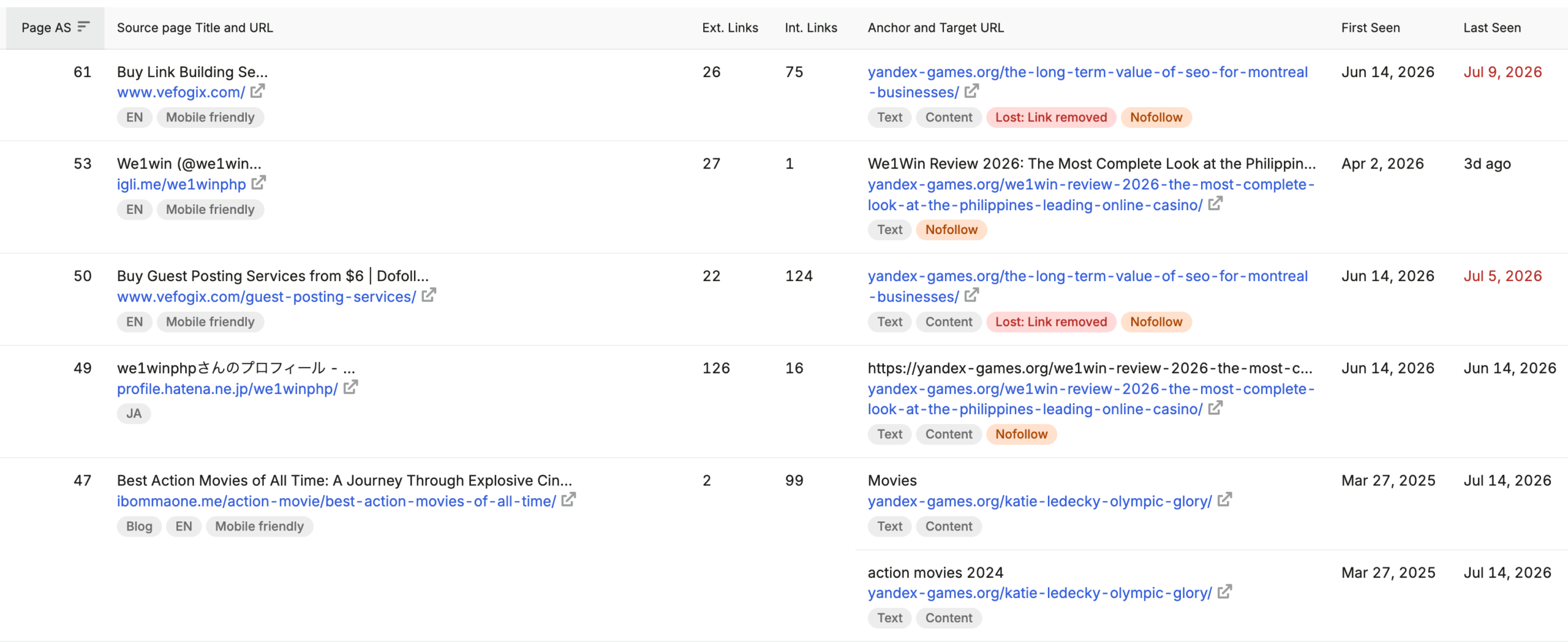
Just a bunch of random links.
7. How easy it is to buy
The final tell isn't on the site, but rather it's in the sales process. A rate card with 300 sites, instant approval, 48-hour turnaround, and zero editorial pushback on your content or your anchor text? Real editors are slow and picky. I've had genuinely good placements take 2–3 weeks and come back with edits.
If nobody ever says no to you, you're not buying editorial coverage. You're renting space on a billboard Google is actively trying to burn down.

$4/link...is this a steal?
Let's take a look at a real PBN in disguise
I've bought bad links before early in my career, from agencies that were happy to hit quota with whatever cleared their own low bar. That experience is why my vetting process exists.
What I do instead
Every link prospect I work wit, whether it comes from the network I've vetted over 14+ years or from direct outreach, clears the same six-point check before it touches a client's site: Authority Score of 15 or higher, at least 1,000 monthly organic traffic, no declining traffic trend, topical relevance, an editorial gut-check, and backlink profile quality.
The seven tells above are what the "editorial gut-check" looks like in practice when a site smells like a PBN. Most dressed-up PBNs fail on tells 1, 3, and 5 within about ten minutes of checking.
If you'd rather not run this gauntlet on every prospect yourself, that's the job of my link building services. Vetting included, teardowns free so you can sit back and relax.
The ten-minute version
If you only have ten minutes before buying a link, do these three:
- Number of categories - are you looking at mishmash of random categories?
- Traffic source - what keywords are driving the most traffic?
- Traffic trend - do you see hockey sticks or cliffs?
A site that passes all three is probably worth the full check. A site that fails any one of them isn't worth the fourth minute.